
Joint ABH-EBHS Conference 2024 - report by Akram Beniamin
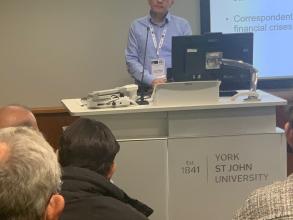
On 29th June 2024 I presented a paper at the Joint EBHS-ABH Annual Conference 2024 which was held over three days at York St John University (UK). The conference was co-hosted by the Association of Business Historians (ABH), the leading UK professional association dedicated to creating and disseminating knowledge about business history, and the Economic and Business History Society (EBHS), which encourages interdisciplinary scholarship in the areas of business and economic history and the application of historical perspectives to current issues.
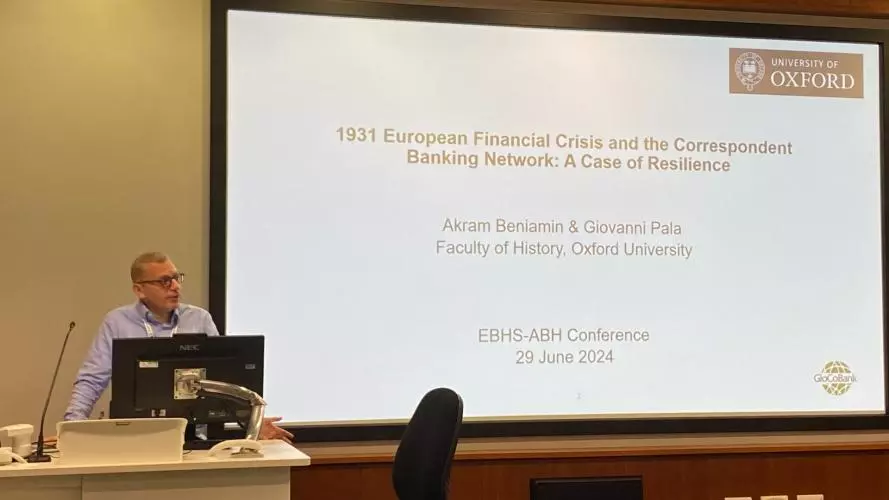
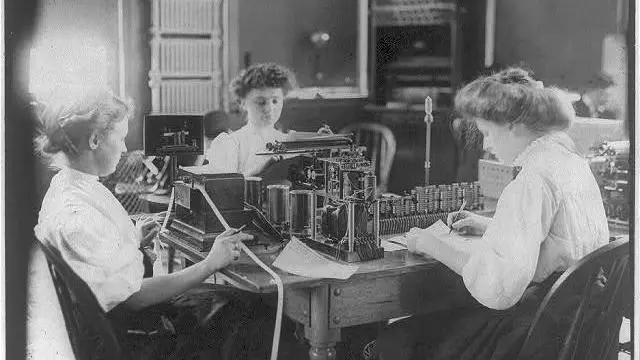
I presented a paper, co-authored with my GloCoBank colleague Giovanni Pala, entitled "The 1931 European Financial Crisis and the Correspondent Banking Network: A Case of Resilience". In this paper, we discuss how cross-border banking crises affected correspondent bank relationships and whether the network of banks sustained international trade and payments during financial crises, taking the 1931 crisis as a case study. Between May and July 1931, Central Europe experienced its most severe banking crisis in the twentieth century as a series of financial difficulties brought down the banking systems of Austria, Germany, and Hungary. The paper departs from the causes or the transmitting mechanism of the crisis to Britain and the rest of the world, which have been well covered in the literature, and instead investigates whether the correspondent banking network was resilient to such a shock. Using annual data from The Banker's Almanac for the period between 1925 and 1935, the paper employs social network analysis to model interactions between the top correspondent banks in London, such as Midland, Westminster, Barclays and Lloyds, and their respondents in the three countries of Germany, Austria, and Hungary, mapping out the shape and changes, if any, of the network during the period.
The findings suggest that the number of respondents in Central Europe did not shrink significantly following the crisis. Furthermore, the scattered archival evidence I have collected from the leading correspondent banks in London suggests they did not rush to cease their relationships with banks in Central Europe when the crisis erupted. Correspondent banking networks between London and Central Europe changed more slowly than fluctuations in international trade and payments, providing a flexible platform for these flows during substantial uncertainty. Accordingly, the paper argues that the bilateral global banking relationships offered stable connections resilient to economic crises. The research contributes to the existing historiography on the evolution of the international banking system and the literature on how correspondent banking interacted with bank crises and whether it magnified or reduced risk.
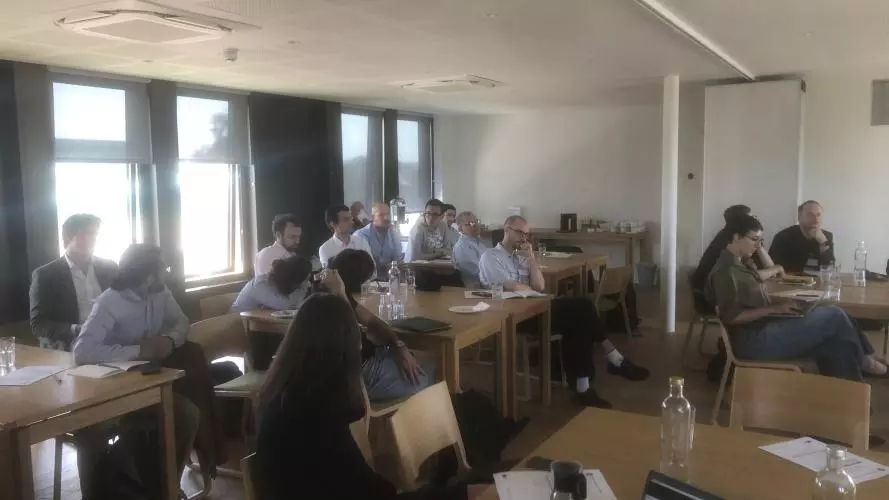
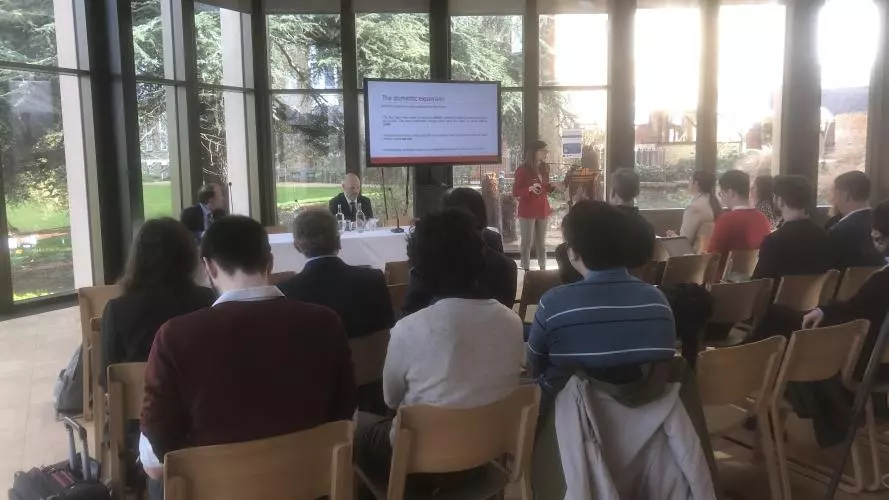
My presentation was part of the "Finance in Interwar Europe" panel chaired by Neil Forbes (Coventry University). The paper was well-received and I left with some valuable comments and suggestions from the audience. The panel also included two other interesting papers: Dimitris Sotiropoulos, Janette Rutterford, and Daniele Tori's (The Open University) paper discussed the UK closed-end and open-ended fund management in the 1930s; Mark Billings (University of Exeter) explored the UK's excess profits duty and tax management during and after World War I.

Whilst at the conference I also had the opportunity to attend several interesting panels connected to my research. The panel on banking elites and financial crises opened with a paper by Niccolò Valmori (European University Institute) which discussed how disciplines could be connected by studying financial elites. In doing so, the paper took a prosopographic approach to banking elites between the 1980s and the Global Financial Crisis. Secondly, Giuseppe Telesca (European University Institute) presented his paper, co-authored with Bruno Pacchiotti and Youssef Cassis (European University Institute), on the memory of the Global Financial Crisis fifteen years after Lehman. The panel, in general, was very useful in conceptualising a way forward to study financial crises through the lens of elite bankers.
I also attended a panel entitled "Development of the Field", in which Stephanie Decker (University of Birmingham), offered some great insights into global business history after colonialism. This topic resonated well with a research idea I have been discussing with my GloCoBank colleagues Nora Yitong Qiu and Manuel Bautista-Gonzalez regarding how the shape of the global correspondent banking networks changed in the postcolonial era, specifically the relationship between the core and periphery in South America, Asia and Africa, and is a potential future area for investigation using the data collected from The Banker's Almanac.